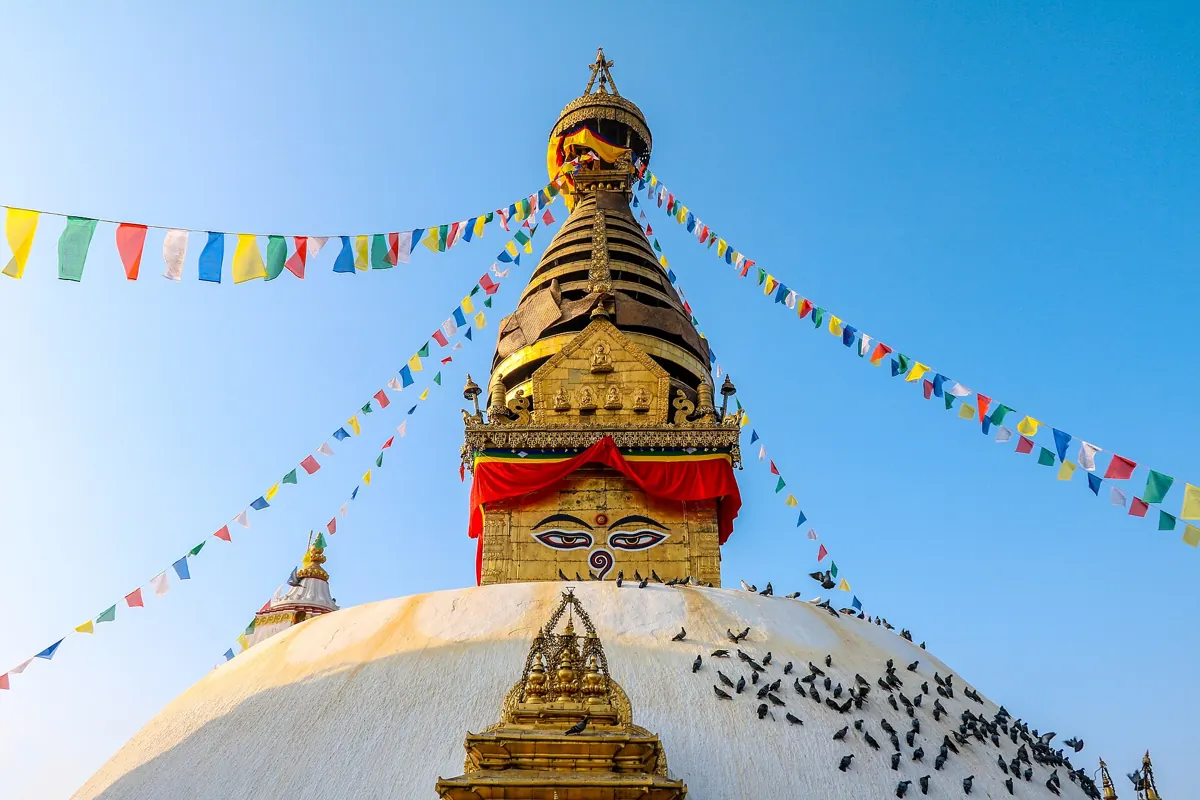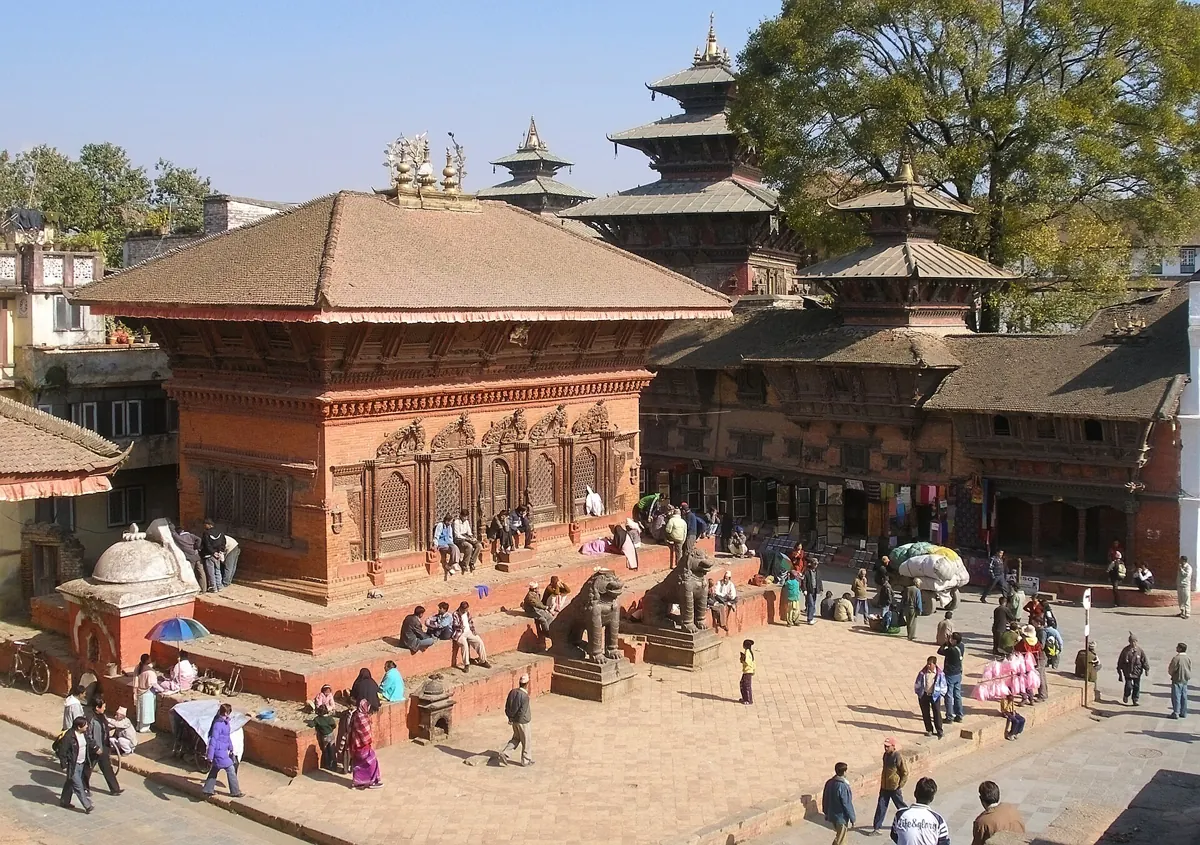
Around Basantapur, the historic city is still busy being a city. Begin among the temples and palace buildings, then walk toward the trading streets of Indra Chowk and Asan. Allow space for people, deliveries and worship along the way.
*Entry amount is a planning estimate, not a verified current tariff. Nationality, age and museum access can change the price. Confirm at the official counter. See fees & opening times.
Know the place
History & fast facts.
Historic Malla & Shah royal seat. Cultural and architectural context to look out for while you explore.
Kasthamandap & the city’s name
Kathmandu derives its name from Kasthamandap ("Pavilion of Wood"), a historic three-story public rest house at the edge of the square where trans-Himalayan salt and grain traders once gathered. Rebuilt with traditional timber joinery after 2015, it marks the crossroads of the old city.
Kumari Ghar & the Living Goddess
Built in 1757 by King Jaya Prakash Malla, the three-story brick Kumari Ghar is adorned with intricately carved wooden jhyal windows. It is the residence of the Royal Kumari, a young Newar Shakya girl revered by both Hindus and Buddhists as the living embodiment of the goddess Taleju.
Hanuman Dhoka & the 15-language stone
The royal complex is named after the red-cloaked 1672 stone figure of Hanuman guarding the palace entrance. Along the outer palace wall, poet-king Pratap Malla installed a 1664 stone inscription carved in 15 scripts and languages.
From Nasal Chowk to Asan market
Inside Hanuman Dhoka, Nasal Chowk served as the ceremonial coronation courtyard beneath the nine-story Basantapur Tower. Walking northeast from the square follows the medieval trade spine through Indra Chowk to the six-way market junction of Asan Tole.
Your self-guided walk
Follow your curiosity.
Suggested sequence, not a surveyed navigation route. Use the map link at each stop, and follow current signs and access rules. Check off stops as you go.
- 01
Basantapur square
Start in the open square and locate the ticket counter. Keep your ticket for checks within the heritage area.
Find this stop on Maps ↗ - 02
Kumari Ghar courtyard
Enter only when permitted and follow the photography restrictions. There is no guaranteed public appearance.
Find this stop on Maps ↗ - 03
Hanuman Dhoka
Look at the palace entrance and ask which museum or courtyard areas are currently open.
Find this stop on Maps ↗ - 04
Indra Chowk
Walk northeast into the old trading streets. Watch for motorbikes in narrow passages.
Find this stop on Maps ↗ - 05
Asan market
Continue to the market junction and finish with tea. Step to the side before checking your map.
Find this stop on Maps ↗
Make time for a break
A taste of the neighbourhood.
The Asan and Indra Chowk area has tea shops and snack sellers. Choose freshly cooked food and safe drinking water. Ask before photographing vendors.