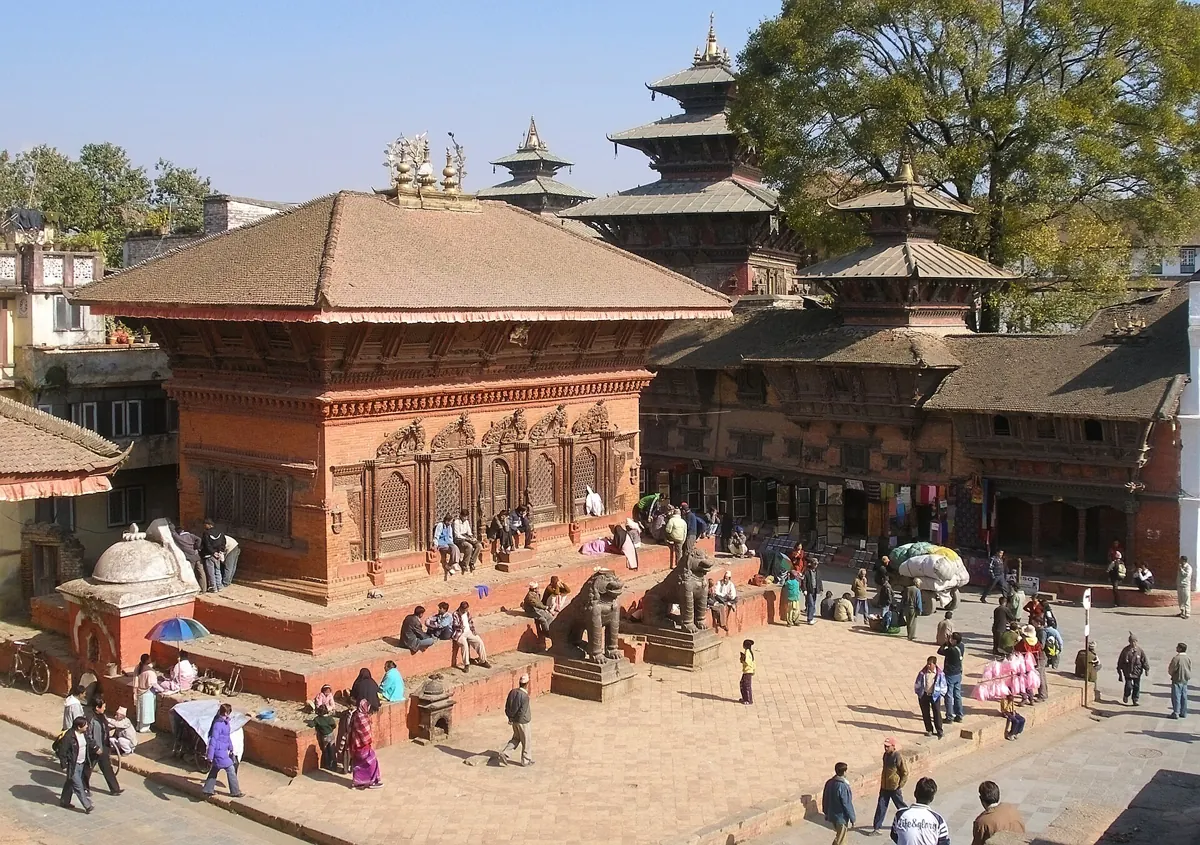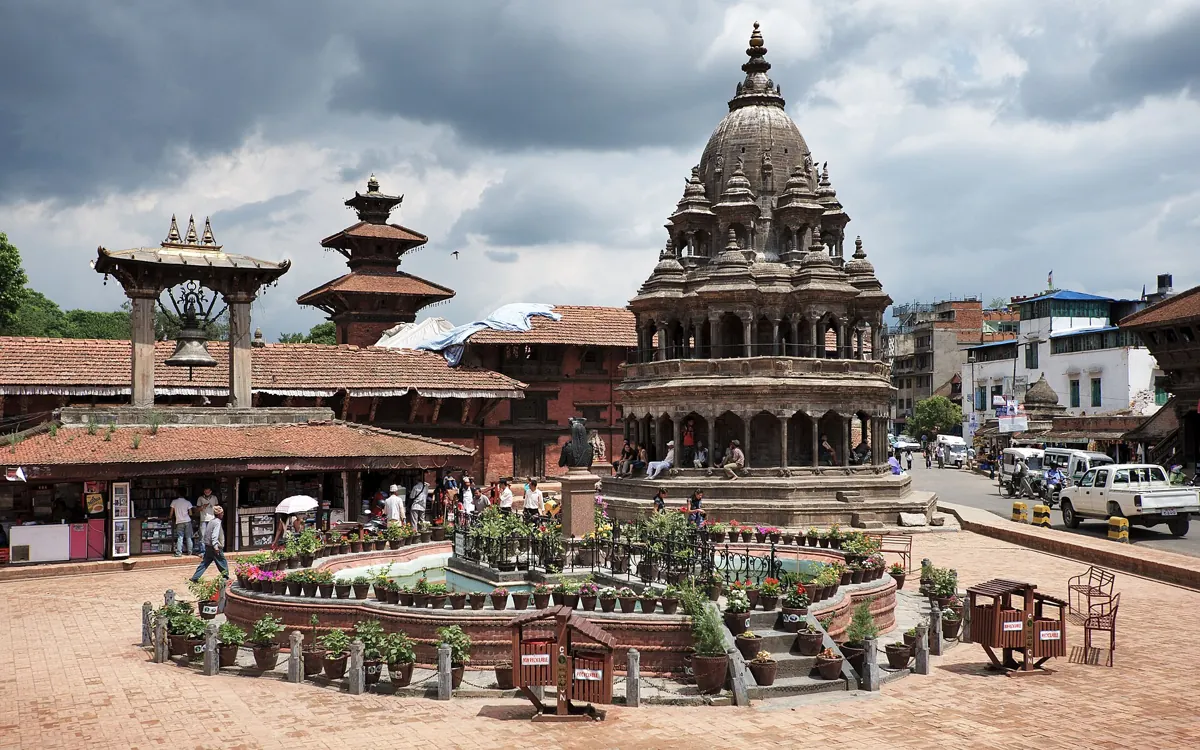
Patan rewards attention to small things: a carved window, a courtyard doorway, the detail on a bronze figure. Begin at Durbar Square, make time for the museum, and then follow the quieter lanes north of the palace.
*Entry amount is a planning estimate, not a verified current tariff. Nationality, age and museum access can change the price. Confirm at the official counter. See fees & opening times.
Know the place
History & fast facts.
Newar Buddhist & Hindu royal artisan city. Cultural and architectural context to look out for while you explore.
Lalitpur ("City of Beauty") & Yala
Known in Sanskrit as Lalitpur and in Nepal Bhasa as Yala, Patan sits on a raised plateau south of the Bagmati River. Four ancient earthen mounds at the city’s perimeter—the directional Ashoka Stupas—frame one of South Asia’s oldest Buddhist urban plans.
The 1637 stone Krishna Mandir
Built by King Siddhinarsingh Malla in 1637, the three-story Krishna Mandir in Durbar Square is crafted entirely of carved stone in the shikhara style rather than brick and timber, with intricate beam friezes depicting scenes from the Mahabharata and Ramayana.
Three royal palace courtyards
The Malla palace unfolds through three principal chowks: Keshav Narayan Chowk (housing the Patan Museum), Mul Chowk (centered on the gilded Bidya Temple and Taleju shrines), and Sundari Chowk, famed for Tusha Hiti—a 17th-century sunken royal bath lined with stone deities.
Mastery of lost-wax bronze & repoussé
Patan’s Newar workshops have practiced cire perdue (lost-wax) bronze casting and gilt-copper repoussé for over a thousand years. North of the square, monastic courtyards like the 12th-century Hiranya Varna Mahavihar (Golden Temple) showcase this living craft heritage.
Your self-guided walk
Follow your curiosity.
Suggested sequence, not a surveyed navigation route. Use the map link at each stop, and follow current signs and access rules. Check off stops as you go.
- 01
Durbar Square
Start in the main square and take in the relationship between the palace and temple platforms.
Find this stop on Maps ↗ - 02
Krishna Mandir exterior
Study the stone temple from the public square. Follow signs and local guidance about entry.
Find this stop on Maps ↗ - 03
Patan Museum
Allow an unhurried visit for the art and architectural context. Confirm current opening and ticket inclusion at the counter.
Find this stop on Maps ↗ - 04
Hiranya Varna Mahavihar
Walk north toward the Golden Temple. Check the separate entry fee and religious rules at the entrance.
Find this stop on Maps ↗ - 05
Old-city lanes
Return through the small streets and courtyards without entering private homes or workshops uninvited.
Find this stop on Maps ↗
Make time for a break
A taste of the neighbourhood.
Try a Newari meal in the surrounding lanes. Ask what a samay baji set contains; ingredients can include meat, egg and fermented items. Choila is usually a spiced meat dish.